Guatemala Map

Guatemala Map
Quetzaltenango (Xela)

Sunday, November 20, 2011

El Salvador, Thursday November 10th

Jefe, Logan, Sarah, Rachel Molly and I started our day with a run in San Salvador. We had previously been told that San Salvador was an extremely dangerous city and it was best to not run, but we asked Cristy and she said as long as we stayed in a big group (that included guys) we would be okay. In reality, the city is dangerous, and we took certain precautions while there, such as never traveling alone, always using private transportation (because on average one bus driver gets killed per day), etc.

We planned to run for 30 minutes, but ended up running for 50 because we got completely lost. Every street looked the same, and we started arguing about which way we needed to go, and then Jefe starting ignoring us and going his own way… it was a lot of squabbling. But, we eventually made it back to Happy House with enough time to shower and eat breakfast and be ready to leave at 8am for our first activity.

As I explained before, CIS organized our entire trip. Our first activity of the day was a conference with Leslie, the executive director of CIS. She spoke to us about El Salvador, its history, current crisis, politics, its future, economy, etc. It was a lot of information! Here is a little summation:

From the moment El Salvador declared independence in 1821, 14 families owned and controlled El Salvador. They did this through military and political control, economic dominance and electoral fraud. 60% of the land was owned by 2% of the people. The other 40% of land was left over for 98% of the population.

Uprisings to challenge the elite rule were common and continued to grow as time continued. In the 1970s leftist organizations emerged, which led to the formation of FMLN: Farabundo Marti National Liberation Front. Violence and repression escalated, throughout this time, and fighting between the military and anti-government guerilla escalated. Archbishop Oscar Romero, known for his efforts in urging an end to the military violence, was assassinated in 1980. This event is known as the catalyst that began the 12 year civil war in El Salvador. The United States had a large part in this war, and sent a shocking 1.5 million dollars per day (for 12 years) to support the military efforts of el Salvador.

The civil war in El Salvador lasted from 1980 to 1992, and ended with the signing of the Peace Accords (which, more or less, haven’t really solved any of the problems). We learned a lot of the details about the war, and I’ll continue to comment on them as I narrate the entire trip.

We talked about the transfer from the colon to USD that occurred in 2001. The government said that with the US dollar, loans and remittances would become easier. The idea was presented at the end of December, and the USD was implemented January (A destructive earthquake in the country during this time kept people from being able to protest the change). There were/are many problems. First of all, prices immediately increased (it was said that people were earning money in colon and paying in USD). In addition, the people who owned tiendas (stores) were not educated and could not figure out the conversions. As a result, they began losing money, getting robbed, and closing down. Also, for the future, whenever the US has problems with USD, El Salvador will have problems.

In 2009, FMLN finally won the election and since then, things are starting to improve for the people of El Salvador, but the country is still in crisis. It is an economy dependent upon remittances from the United States, no jobs are available, its crime rates are one of the highest in the world, poverty covers the country. When presented with all the facts, finding a solution becomes overwhelming.

After our conference, we went to lunch at a place called SOYA. This is a program that was developed by a missionary worker who spent some time in El Salvador and then fell in love with the country and decided to live there. She was very interested in nutrition and child development. She did some research, and discovered the nutritional benefits of soy. After experimenting with flavors and taste, she finally found a formula that El Salvadorans would like and use. Right now, she works with a program she created to sell bottles of soy milk to community members at a low price. They also make and sell other soy products such as breads and cookies.

She is currently organizing a study with a local school in order to track the positive effects of nutrition on child development, which will begin in 2012 when students return to school from break. Right now, the program functions because of her leadership, but she is working to train people and create self-sustainability within the program.

There is also a lunch program that is a part of SOYA, which helps it earn more money. Local women from the community come and cook meals, and sell them for whoever comes. We ate here three times throughout the trip. The best part was that we could choose what we wanted to eat and ask for more of one this and less of another. The food was delicious.

After lunch, we went to San Salvador cathedral where a large mass was held to honor Oscar Romero after his death. During the mass, a huge massacre occurred killing and injuring hundreds. Below the church rests Oscar Romero’s Tomb.

We then went to a third level hospital in San Salvador and met with a physician there. A third level hospital takes care of major emergencies, surgeries and illnesses such as neurosurgery, cancer, heart surgery, etc. She showed up around the hospital and spoke with us in her office. The hospital itself serves the entire country and only has 500 beds and 16 operation rooms. All of the services are free for everyone.

That evening we had a reflection, and then went out to a pizza parlor for dinner. Coming home, Logan didn’t look so good… he was freezing cold and shaking like crazy. His condition only worsened, and that night he went to the hospital. It turns out he had 3 parasites that caused a systemic bacterial infection which traveled to his liver and nervous system. He is fine now, but did spend 3 days in the hospital on intravenous antibiotics. The culprit: he ate ceviche on the street for lunch Tuesday, essentially breaking the three “rules” we have been told about eating food in Latin America… 1) don’t eat things raw, 2) don’t eat street food, 3) be careful with the seafood you eat.


The conference room inside CIS, where we spoke with Leslie.
My plate of broccoli, pan fried fish, rice and tortillas.
Sherry, Nahal, Marissa, myself and Rachel at SOYA
Lunch at the SOYA program
The inside of the Cathedral
An upwards look of the Cathedral.
The inside of the Cathedral.
The park in front of the Cathedral. Imagine the park full of people, and then a giant massacre occurring.
Oscar Romero's tomb. The staff in the upper lefthand corner represents the peace that Romero maintained in El Salvador. The rose branch on the lower lefthand corner represents the beauty and pain that life brought him, and the olive branch on the lower righthand corner represents peace. I can't remember what is placed in the upper righthand corner... sorry!
Front of San Salvador Cathedral
Korrin and I in front of San Salvador Cathedral
The front of Hospital Rosales
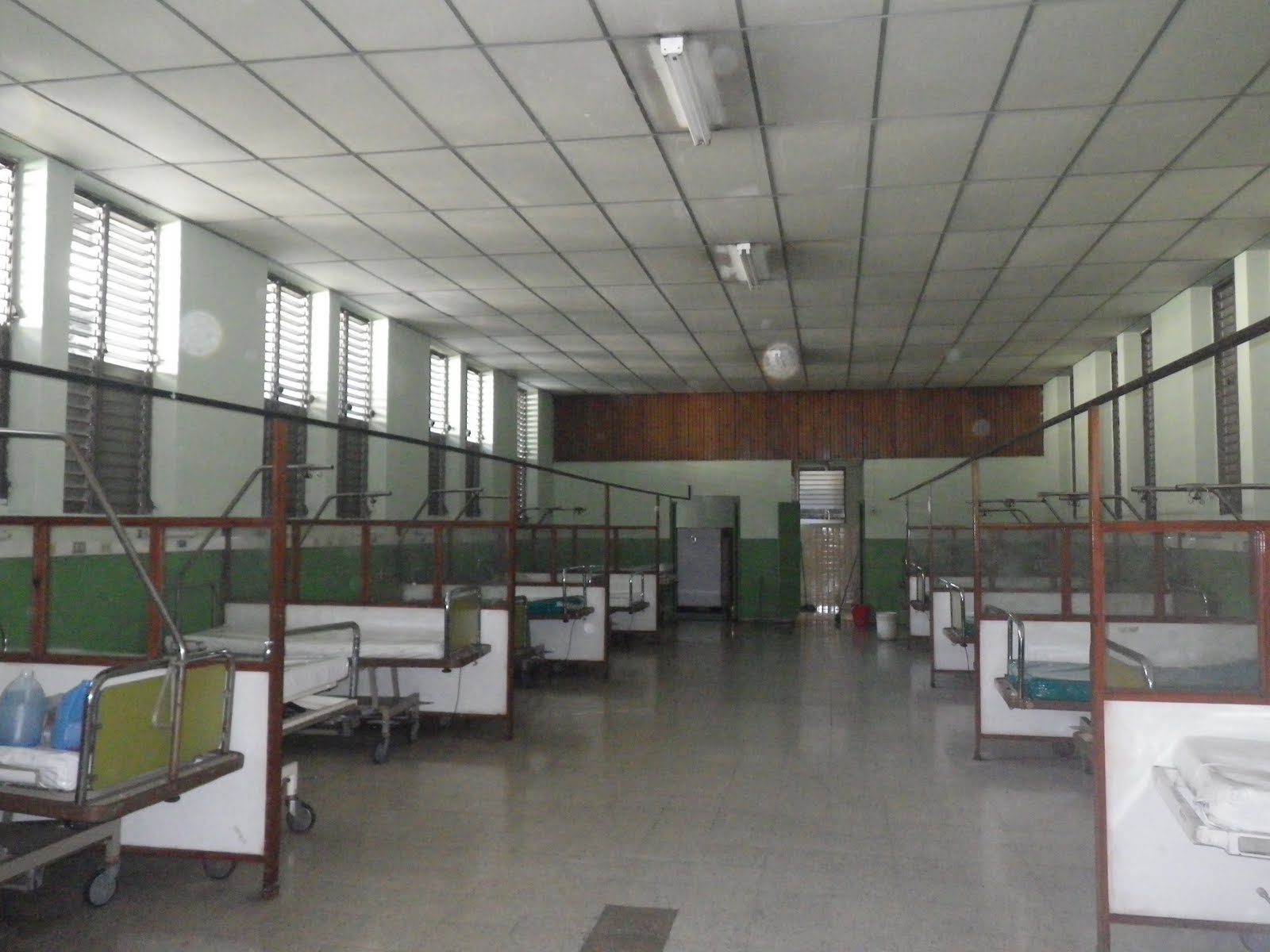
The cancer ward in Hospital Rosales. This room is remodeled from the original because the ceiling is low and there are separations between beds. I wasn't able to take a picture of an older room because I didn't want to infringe on patient privacy, but the older rooms had high arching ceilings and the beds did not have walls between them.
Hallway in Hospital Rosales

Saturday, November 19, 2011

El Salvador, November 9th

Our El Salvador adventure began at 3:45am at the corner of Rodulfo Robles and 8th Ave, Zona 1. We stuffed 15 people (plus luggage) into two taxis and were taken to the Alamo bus station.By 4:30am, we were on our way. The bus ride was freezing cold, but otherwise uneventful and we arrived in Guatemala City around 9, took another set of taxis to a different bus station, and left for San Salvador at 10am.

We got to the Guatemala/ El Salvador border rather quickly (about a 2 hour trip). At the border, we simply got off the bus, walked across the border, and got back on the bus. Kati took care of the passport business. We did find it weird that we only got Guatemala stamps for exiting, and never an El Salvador stamp for entering. So technically, I guess we were in limbo for 9 days?

The border took about a half hour, and from there we had another hour until we arrived in San Salvador. We waited at the bus station for a while, until we were picked up by Cristy (our coordinator for the trip) in a private microbus and brought to our hostel. So, a long travel day, but compared to our trip to Oaxaca, not so bad.

Our entire trip was planned through CIS (Centro de Intercambio y Solidaridad,http://www.cis-elsalvador.org/), an organization created in El Salvador after the signing of the peace accords to promote equality and create solidarity within communities. Cristy was our guide for the entire trip. She organized everything and traveled with us throughout. Our schedule was absolutely full, but everything went incredibly smooth and we were very happy/impressed with CIS and Cristy.

Our “home base” was a hostel in San Salvador named Happy House. We stayed there the first night and others throughout the trip, although we did bounce around a lot. Compared to many of the places I have stayed during my time in Latin America, this hostel was luxury. Each room had a TV and an AC unit and a shower with hot water (at times too hot) and good pressure, and they gave us towels!

After situating ourselves in the hostel and meeting downstairs to head out to dinner, Rachel realized she had lost her passport. After some quick calls, and with perfect timing and luck, we found the passport. She had left it on the bus, but our microbus driver knew the manager of the mechanic office that always services the buses before they make another trip. The manager found the passport and agreed to hold it for us. With this luck, Rachel had her passport back within an hour. Without this luck, she would have had to pay $10,000 US dollars to get it back (if it got in the wrong hands) and spend a whole lot of time in the US Embassy. But luckily, we didn’t have to deal with that.

After solving that dilemma, we ate dinner out at a popular pupusaria. Pupusas are “the food” of El Salvador. They are basically thick tortillas stuffed with whatever you want. The most common are cheese, bean and cheese, and bean/cheese/chicharron. We also had ones with spinach and zucchini. On top of the pupusas you put a slightly pickled salad of cabbage and carrots, and then over that you pour a salsa that is a little spicy. You eat them with your hands, and they are a delicious, messy, greasy El Salvador treat… a great way to start our trip and welcome us to the country.

That night, we watched a little TLC in Spanish, mostly because we were amazed with the fact that our own TV was available to us. We fell asleep around 8:30 and slept well.


Pupusas!

Happy House room with TV!

Lobby of Happy House


Tuesday, November 8, 2011

La Muela

This weekend was pretty relaxing. Saturday a few of us headed to the large Scandinavian gym and then to Walmart. In the afternoon, we hung out at a café and at night, Marissa and I stayed home and watched The Goonies.

Sunday was election day, so we figured it probably wasn’t too smart/safe to try and get anywhere outside of the city (in case you are curious, Otto Perez Molina won the election and will start his presidency January 14, 2012). Instead, we decided to do a hike close to Xela. We wanted to do a hike called Siete Orejas, but we had some trouble figuring out how to get there (5 different directions from 5 different people), so we decided to hike La Muela (which literally means The Molar).

Sunday night, we went to the movie theater and watched Contagion and then had dinner at a restaurant near the theater. It was a fun, relaxing evening.

There isn’t too much to say, just wanted to post some beautiful photos! Tomorrow we leave for El Salvador, and we will be there until the night of the 18th. We have a jam packed itinerary and I’m really looking forward to the trip!


We saw this snake on the hike. I don't know what kind it is, but it was large and moving and I didn't want to get close...

Saturday, November 5, 2011

Last 3 Weeks of Volunteer Work

I have to say, these weeks of volunteer work were probably my least favorite time of the program. It isn’t that I didn’t enjoy volunteering, but more that I felt I never did anything valuable. I was looking forward to making a difference and fulfilling jobs that needed to be done, but that wasn’t really the case. I really just spent time observing. Despite this, I did get to work on my Spanish, observe some interesting consults, help with some serious emergency situations with the Bomberos, and teach a group of children (who had zero interest in dancing) how to do yoga and dance. I was exposed to situations I had only heard about, giving me a whole new perspective to life in general.

Sadly, Yoganza was a huge fail. The kids were not into learning ballet or yoga, and sort of refused to move. We would ask them questions about their day, and they would respond with a head nod, or just not respond.

I think many factors contributed to our class not working. First of all, the kids were an average age of 10-12. At this age, you start to develop an attitude and decide that you aren’t going to do anything. These kids were definitely in that stage. I think there was also a cultural barrier (more so than the language). When two white skinned, blonde, from “rich” United States girls come into a room with their computer full of music and over-enthusiasm about dance and yoga, and try to teach a bunch of kids from a poor community how to dance (when yoga and ballet aren’t even a part of Guatemalan culture), there is a large disconnect.

Many kids grow up hearing about how amazing the United States are, and how people who come from the States should be held in a “higher respect” because they have money and security. Rachel and I obviously don’t think that, but it is difficult to change the mentality of anyone when they have grown up surrounded by a certain idea. I think we would have done better to start the class by saying “we are equal to you and only want to teach you some dance and have a fun time.” Maybe then, it would have functioned a little better.

The front of PEILE, where Rachel and I taught Yoganza.
The four kids that showed up to Yoganza the last day (clearly a really popular class...)


Monday, Tuesday and Wednesday afternoons I was at the Red Cross. I helped take blood pressure and weigh patients, and was able to watch every consult with the doctor. Usually, there were about 7 patients each afternoon.

The Red Cross is not a free clinic, so it is not as busy as the public hospital because many people cannot afford it. In addition, many people do not know that the Red Cross has a doctor… many people think it is just a basic clinic with an ambulance service.

Most of the patients that come in realize that the doctor is an orthopedic, so they come in with specific problems. I saw many X-rays and broken bones, and may have slightly improved my ability to look at an X-ray? Luckily, I didn’t see any more horrifically infected stitches.

What I did notice is that the doctor was not a huge fan of conservative care. EVERYTHING required surgery. I know I am not a doctor, but I think some of the conditions could have improved with a less invasive treatment option. He also liked to write a million prescriptions for each patient. The problem with this is that many of the patients could not afford the operations or medications.

The worst condition I saw (within the past three weeks) was a man (I think 50-60 years old) that had been suffering from hip pain for 9 years. When he finally came into the office, he could barely walk. We took an Xray, and it showed two hip sockets entirely destroyed to the point where bone was rubbing up against bone. The only cure for this was total hip replacement, a surgery that costs 45,000 Q for one hip (that’s about $6,000 USD). After a few months, he would have to get the other hip done. But, he couldn’t afford one hip, let alone two. He began crying in the office, not knowing what to do. The doctor did not have any suggestions. It was hard to see, and I had an urge to just give him the money to get the surgery done.


The front of the Red Cross.
The waiting room at the Red Cross.
The "scrub" room where all the doctors prepared for surgery.

The Operating Room. I never got to see a surgery, but a couple of my friend got to help the doctor reset a broken bone.

One end of the patient/clinic/consult room (whatever you want to call it) at the Red Cross.

The other end of the patient/clinic/consult room.


My time with the Bomberos was definitely my favorite. There was a lot of waiting time, but during that time I got to talk to the other Bomberos and watch Spanish TV, which is really helpful with comprehension. One day, Aeja and I spent about 2 hours teaching the guys curse words in English. In return, they taught us the same in Spanish. The Bomberos really appreciated our help and even presented us with certificates the day we left.

Week 4, we just had one emergency. There was a woman that had a really bad migraine and super high blood pressure and nausea. We picked her up to take her to the hospital. While in the ambulance, she began puking all over. It was my job to hold the bucket to catch the puke. Xela streets are the exact opposite of smooth, and when you are racing down the road, liquid splashes around a lot. Add that to the sound of puking and the smell inside the ambulance… and I was lucky I also didn’t start throwing up.

Week 5, we got a call that there was a woman passed out in the middle of the street. She was an elderly woman, and completely alone. She either did not understand our questions or could not respond, because she gave us nonsensical answers to questions such as “what is your name,” “where are you from,” and “how old are you.” She did not have any information on her, making it extremely difficult to identify her condition and contact any family she may have had. I have to admit, I’ve never really thought about receiving a patient that has no family members and cannot respond to any questions. I knew it existed, but like every experience I have had here, it is different when you are living it.

Week 6 was a bloody day. We had an emergency right when I got to the station at 8am. When we arrived, there was a guy who had an accident on his motorcycle. He was breathing and bleeding a little, but the most urgent condition was the spinal pain he was having and his unwillingness to move his back to lie down on the stretcher. We took him to a private clinic and the nurses took him at the door.

The second emergency involved a shooting at an automobile mechanic store. There was a negotiation that I suppose had gone awry, and a robber showed up to the store with a gun. There was a father and a son, and both were shot. When we arrived at the scene, the robber had fled and the money was gone. The robber had good aim. The father had a bullet that entered just under the heart and came out his back. When we arrived, he was surrounded by a pool of blood and as white as a ghost, but still alive and breathing.

The son had a bullet lodged in the left side of his thorax. He did not have as much external bleeding, but judging by the swelling of his abdomen and the pain he complained about, there was some serious internal bleeding going on. We helped get out the equipment to administer oxygen, and moved the stretchers, but because we did not have any training, Aeja and I could not do much to help. As a result, we sat up front in the ambulance while the two Bomberos took care of the patients in the back.

I thought riding in a chicken bus was scary, but riding in the front seat of an Ambulance is probably one of the scariest things I’ve done. We went at full speed through the streets almost hitting at least 5 people. In addition, Xela roads are not designed like city roads in the US, so emergency lanes don’t exist. As a result, I’m pretty sure we almost hit, or at least sideswiped, at least 5 cars as we raced to the hospital.

When we got there, the patients were rushed into ICU. Unfortunately, the nurses shoved us out of the room, so we didn’t really get to see any of the emergency care (we understood, but were still slightly disappointed). About 2 minutes later, we saw the son leave for surgery. After helping record all the information, dealing with the press (who were swarming), and cleaning all the blood out of the ambulance, we headed back to the station.

The next day, the story was in the paper. The father died, and the son is still in intensive care. Money is a dangerous thing.

On our way back, we got another call. When we arrived at the scene, there was a man, probably about 40 years old, passed out on the sidewalk with a huge gash in the side of his head, his eyeball lodged out of the socket and up towards his forehead, and blood flowing out of his ear. The creepiest thing about this emergency was that nobody was around him. We didn’t know who made the call, or what had happened to the guy.

We wrapped his head and applied pressure to try and stop the bleeding, and rushed him to the hospital. When we got him to the ICU, he suddenly woke up and started getting really aggressive, trying to get off his hospital bed, wrestling with and kicking the doctors that were trying to hold him down. Again, the nurses kicked us out of the room, so we went back to the ambulance to wait until the Bomberos were ready to go.

The front entrance of the Bomberos.
This is the room where we hung out between emergencies. I was always freezing in here!


Really awkward photo of Aeja and I with the Bomberos that were on duty our last day (obviously taken using a timer on my camera)

Halloween and Dia de Los Muertos

I remember thinking back in July how excited I was to be able to experience Dia de los Muertos while in Latin America, and thinking how far away it was. Now, its over. Time is flying!

The day was really enjoyable. I got a taste of all the traditional things that Guatemalans do for the holiday. If you don’t know, Dia de los Muertes is when people celebrate the lives of people that have passed. Its not a sad day, but a holiday to remember all the happy memories with loved ones. The tradition of Halloween on October 31st in the US comes from this “day of death” which is always celebrated November 1st.

Monday night, October 31st, we had a little celebration at the school. Everyone was supposed to bring one food item. Most people brought candy and cookies, popcorn and brownies, but Rachel, Harim and I made an awesome fruit salad. It was delicious! A lot of people dressed in costume, but since I didn’t really have time to change between my volunteer work and making the fruit salad before the party, I just wore my scrubs. I thought it could function as a costume, but I was told many times it didn’t count. Oh well! We had a good time dancing and hanging out.

Tuesday morning, Rachel and I ran to the cemetery at 6AM. We did our usual route where we run along the outside and enter from the back, but Tuesday we walked through the cemetery. At 6:30 there were already a ton of people in the cemetery. There was marimba music and everyone had tons of flowers and food to bring to the graves of their loved ones. The colors were beautiful and I really enjoyed watching people decorate the graves. I didn’t take pictures of people decorating graves because I felt that was inappropriate, but I did take a lot of pictures of the cemetery. They do a semi-good job of showing how beautiful it was.

At 8AM, we met to go to Festival de Sumpango (http://www.festivalsumpango.com/). This is a festival of kites… huge and amazingly crafted kites! The tradition of kite flying in Guatemala originates from the idea that people use kites to help the dead leave the living world and enter the heavens in peace. It started as an activity for kids, and it is still really popular among Guatemalan children, but it has also grown into a large tradition for people of all ages.

The trip to the community was long (about 3 hours), BUT we had a private microbus with a TV, so it was a glorious ride. The son of the owner of the micro company was with us, so he watched Smurfs. Most of us listened to music on our ipods and enjoyed having space to spread out and sleep.

When we got to the community, it was packed! We waited in a line for a while until we got into the parking lot. From there, we took a little clown car to the entrance of the fair, which was about a 10 minute ride. It was pretty humorous fitting all 11 of us in the little car (I wanted to take a picture, but was a little squished).

The place was packed! The location is close to Antigua, so there was also a lot of foreigners there speaking English. It was weird to hear it around us and see other tall, white people. You really don’t see it all that much in Xela (especially now because it isn’t tourist time). We felt a little sense of protectiveness, like “this is our Guatemala, all you other tourists shouldn’t be here speaking English.” Because of this, we vowed to only speak Spanish that day.

The place looked a little like the Independence day fair, with tons of people and food and music. But, there were kites… and these kites were HUGE but at the same time really detailed. I learned that some of them take 3-4 months to make. We didn’t get to see any of the large ones fly, but apparently they do, and there is an annual competition to see which one lasts the longest. I’ve posted a ton of pictures below.

After checking out all the kites, we decided it was time to have some lunch. As part of the trip, we were given pan relleno from Artesano bakery in Xela (I’m pretty sure I’ve mentioned it before). Pan relleno is basically a whole wheat bread stuffed with veggies and cheese. Its pretty delicious. But, we really wanted to try some Elote because it was being sold at every food tent (and I’ve wanted it for a while, but have been afraid to eat street food). Elote is essentially corn on the cob that is grilled until perfection and then served with lime and salt. I’m definitely bringing it back to the US.

We ate our Elote and pan relleno while watching kids fly smaller kites. After lunch, I decided on a whim that I wanted a hair wrap, so we found a woman that was doing them for 20Q. At 2PM, we left to drive home.

For dinner, we had traditional Fiambre. I can’t say I was a huge fan, but I was happy that I got to try the dish. The only problem is that it is a little like Thanksgiving in the sense that so much food is prepared that you have leftovers over and over until it is gone. So, I had Fiambre for dinner, lunch the next day, and lunch the following day. I think it is finally gone now!

The Fiambre plate starts with Romaine lettuce spread on the bottom. Then, a salad of carrots, green beans, cauliflower, peas and red beans, boiled with beets and vinegar and a few other spices, so that every veggie turns red and you can’t tell one from the other (because they all have the same color, texture and taste) is put on top. Then, 4 different types of sausages are put on top (I obviously didn’t eat that part… and was pretty happy I didn’t have to eat black sausage). On top of that, 4 different types of cheese are sprinkled that include queso fresco, parmesan (the non-perishable kind), some cheese that tasted a little like mozzarella, and Kraft American cheese. On the side, there was an onion that was boiled to be a little softer, and a raw radish.

Overall, a great day!

Xela cemetery
more Xela cemetery
In this picture I tried to capture the woman walking and balancing a million flowers on her head. Everyone was doing the same. I see it every day, but I'm still amazed at how Guatemalan women balance literally anything and everything on their heads while walking on Guatemala's uneven and rather dangerous roads.
One of the "tiendas" selling flowers. There were at least a hundred vendors selling all types of flowers.
The entrance to the kite festival. Check out all the people!
This picture gives you a good idea of how large these kites actually were.
More kites.
More kites.
I liked this one a lot, but can't imagine it would fly well...
I also liked this one because it was very detailed.
This shows you the "backbone" structure of the kites. The actual designs were just made of 2 layers of tissue paper.
A close up so you can see some of the detail. This one used gold paper.
The hillside where we watched all the children flying their little kites.
Fiambre!
Elote!
Getting my hair wrap.
Scary faces + delicious fruit salad.

Friday, November 4, 2011

La Playa Tulate

After not leaving Xela-land for a while, and with Halloween coming up, we decided it was time to spend the weekend traveling somewhere new. We had a free weekend, so half of the group decided to go to Panajachel, a place known for its Halloween parties because it is full of foreigners. Marissa, Rachel, Sarah, Korrin, Harim and I decided to take a relaxing trip to Tulate beach.

We all wanted to go to the beach, but agreed that we wanted to stay in a hotel nicer than the one we stayed in at Tilapita (the trip we made at the very beginning of the program, where a worm and a few other bugs greeted us as we walked into our room). So, we looked online and found a great Eco Tourism option, right on the water with bungalows made for 6 people and private bathrooms. There was even an online reservation option! So, we did that (but didn’t pay in advance, just in case). Novice traveler rule #1: NEVER trust what a website says.

We began our travel adventure at 7:30 AM Saturday morning. We walked to La Rotunda, where we picked up a microbus to Las Rosas, a bus terminal. There we waited for a bit and got on a bus towards Mezate. We were expecting this bus ride to be about 2 hours long, and it surprisingly was. The only annoying part was that we got on the bus late, so we had the seats in the aisle where you are sitting on one butt cheek, grasping your backpack with one hand, and hanging on for dear life with the other. You also get to deal with people passing up and down the aisle constantly, which means you get a lot of interesting items shoved into your face (smelly food, beer bellies, hair, bags of who knows what, etc.)

When we got to Mezate, we quickly found the bus that would take us to Tulate. However, we had to wait on the bus for about 30 minutes until it was time to leave. It was good that we had a great number of seats to pick from, but bad that we had to sit in the hot bus forever. Finally, after the bus filled up, we headed out.

We drove for about 10 minutes until the bus stopped at some market. The bus driver just got off the bus, and we were there for about another 20 minutes. After this wait, we were finally on our way to the beach (at this point, it was around 11:30 and we were done with traveling, so it took a little bit of discussion to remind us why we were putting ourselves through this).

The rest of the bus ride was a little scary. The road between Mezate and Tulate is very straight and long, and has a lot of potholes. So, between every stop that we made, the bus would accelerate to full speed and drive as if there were no lines on the road. The worst part is that every other driver on the two lane highway was doing the same thing. The result… a real life videogame: “How many cars can you pass without hitting a pothole, spinning out of control and bursting into flames?”

After about an hour of this thrilling ride, we saw a sign for the hotel so we screamed to the bus driver “bajamos,” which essentially means “getting off here.” We were deposited on the deserted road with a rather flimsy looking sign pointing in one direction “ECO HOTEL à.” So, we walked in that direction. We knew we were on the coast because it was extremely hot and humid, but we couldn’t actually see the ocean. In fact, we really had no idea where we were. We continued to follow the road for about ¾ of a mile, happening upon nothing but dogs and chickens. Finally, we came upon a house that was actually inhabited. We asked them about the hotel, and they said that we just needed to continue for a bit longer and it would be there. We did just that.

Finally, we happened upon the hotel! Well, it was another sign, almost impossible to read because it was so torn apart. And it said to ring the “timbre” or “doorbell.” Except there wasn’t one. We could see nobody inside, and the gate was locked with barbed wire on top. We called out and nobody responded. So, we wandered around the side and finally found the ocean! In order to get into the hotel, we decided to walk on the rocks along the seawall (the tide was way out). After balancing on rocks and jumping over large puddles, we made it to the back of the hotel and walked in. There was a little girl, probably about 5 years old, sitting on the sand playing. When she saw us, she ran into some room and a few minutes later, a woman came out, looking really annoyed that we were there.

We asked if there were rooms and if we could stay there, and she asked if we had spoken with the owner of the hotel. I said no, but I made an online reservation. She looked at me like I was talking in a foreign language… and I KNOW I was talking in Spanish.

Apparently, all of the rain had damaged their rooms, and they only had two available. They weren’t occupied, so we asked to see them. The first one fit 3 people, and would have been fine, but she couldn’t find the key for the second one. So this hotel was no longer an option.

At this point it was 1:30 and we were hot, disgustingly sweaty, tired from traveling, and hungry. So we asked if she had any food. The answer was a simple “no,” with a face that added “why would I have food for you?”

We asked her if there were any other hotels in the area, and she told us of one, but that it was far away. We asked how far, and she pointed in a direction. That was all we got. So, we headed back along the seawall in the other direction. As we were walking a woman stopped us and asked us what we were doing. I’m sure 6 gringos wearing pants and backpacks, walking along the seawall totally lost, was a really interesting sight.

The woman told us that this other hotel was no longer open either. We asked if there were any other options. She said, yes, but that we had to take a lancha (like a little boat) to get there. She offered to drive us to the dock free of charge. Having no choice, we hopped in the back of her pickup and she drove us to the dock. The lady was actually really helpful, telling us about the island and what we should do. We gave her 30Q for driving us there.

We took a lancha over to the island and got off, thinking to ourselves, finally, we are here! But, sadly most of the hotels we saw were also closed. In fact, the beach was very quiet. There were houses and abandoned hotels and two restaurants. At this point, being 2PM, we needed to take a rest and eat lunch and figure out what to do. We walked up to the beach (where we could finally see waves!). Both of the restaurant owners were pulling us in either direction. They both had the same food options (as every coastal place in Gautemala does) so we chose the one to the right. Bad decision.

We started with ordering drinks, and all asked for agua mineral (seltzer). They said they didn’t have that, so we asked for agua pura. They didn’t have that either. Turns out, the only thing they did have was orange soda. They told us they couldn’t find any agua pura on the island. We ordered our food and were sitting there when we saw people in the other restaurant drinking agua mineral. So, we went over to the other restaurant just to get drinks. There was plenty of agua and agua pura and cocacola over there. And their food looked delicious… a lot better than the 10 shrimp I got.

In reality, we were all glad to just be sitting and enjoying the sound of the beach and the breeze. But after a while, we figured we should probably find a hotel before we got stranded on the island. We walked around asking, and learned that there were two options, one close to where we were with rooms and public bathrooms, and another further down the beach with private bathrooms and a restaurant. That one sounded appealing, so we went there.

After walking about ½ mile along the beach, we finally found this other hotel. We entered and liked what we saw. Until we heard the price: 850Q for the 6 of us, which comes out to about $110.00 USD. Thinking about it now, when you divide that by 6, it comes to about 20 dollars per person, which in reality is cheap. But, for what it was, I didn’t want to pay that much. Plus, a few girls in our group were insistent upon not paying that much. At this point, we were running out of time. It was 3:30 and the last bus to Mezate left at 4:30.

We needed to find a hotel before we got stranded. We didn’t know if there would be a bus back to Xela once we got to Mezate, and we certainly didn’t want to be stranded there. So, we went to our last hotel option. We had no choice but to pick it.

Talk about the nastiest hotel that I have ever seen/stayed at in my life. You really can’t even call it a hotel. Think old crack house in the States that hasn’t been touched for 20 years. That’s how disgusting it was. But, we only paid 25 Q per person. The rooms and beds were bad. You just look at it and can see the bugs that must be crawling in it. But, the bathroom was worse. No running water, and I don’t think the toilet had been cleaned ever. I thought to myself, I will spend no time here.

Even though we were all disgusted, we took it in stride… just another Guatemalan adventure! After changing into our suits, we finally made it to the beach and into the water. It was so refreshing and we were very happy at that point. We played in the waves and relaxed on the beach reading magazines and gossiping…. doing exactly what we came to the beach to do.

We watched the sun set, and then headed back to the hotel to change and find some dinner. Except everything had shut down. The entire little community was dead. We headed back to the expensive hotel because we knew they had a restaurant there. But, they wanted 25Q just to enter the hotel. Then, they wanted 60Q for a typical Guatemalan meal (eggs, beans, torillas) without fish. Adding fish was going to cost another 40Q. We definitely said no to that. We had a few snacks that we had brought and decided we would rather eat those for dinner.

Back at our hotel, we ran into the owner. We explained our situation and she said she would be happy to make us dinner, and that it would be ready at 8. Sarah, Rachel and I ordered caldos (essentially a soup with a whole fish, whole crab, and whole shrimp in it), Korrin ordered fish, and Harim and Marissa ordered shrimp.

We had about an hour and a half to kill, so we went looking for some beers. After searching the entire island, we finally found a tienda with Gallo (the national beer). We sat and talked some more, and then went to dinner. My caldo tasted good going down, although I would pay for it later. But in the moment, we had some good “girl time.”

We went up to our room around 10, because it was dark and the owner turned off all the lights at the hotel. We sat on our disgusting beds, reading funny things from Cosmo and laughing at our situation (I’ve learned that laughter is a great way to deal with a situation you’d rather not be in).

Lets just say that night was not all that great. As I said before, I regretted the caldo, which seemed to affect me almost immediately. During that night, I was chased down the beach in the dark by a barking dog, was forced to use the disgusting bathroom I swore I would never enter numerous times (thank god for hand sanitizer) and was awake until about 4:45 sitting on the balcony with stomach cramps. At 5am I managed to sleep for about an hour, until we were all woken at 6 by a LOUD rooster.

Rachel and I went running on the beach, which I though would be rough considering my night, but actually felt really good. After, we went swimming, which again was really refreshing.

We were on the lancha leaving the island by 8:30AM. None of us really wanted to hang out there. At 8:45 we were on a bus on the way back to Mezate. We expected the ride to take about an hour, then we could switch to a bus to Xela, and we would be back by noon. All we really wanted was to be clean.

Instead, the bus ride between Tulate and Mezate lasted 2.5 hours. It was long, hot, crowded, long and slow. At first, we moved at snail pace picking up everyone from the side of the road, honking the horn REALLY loudly and constantly. Then, there was a problem with the engine. The bus driver and ayudante stopped the bus and tried to figure out the problem, but had no luck. So, we spent over an hour unable to go above 2nd gear. It was painful.

Luckily, when we got to Mezate, there was a bus to Xela ready to go. We hopped on the bus and were shoved in the back. Luckily, this bus ride went fairly quickly. By 1:30 PM, we were back in Xela. I went straight home and showered. Every item that went on that trip was washed before it re-entered my room.

So, not exactly the relaxing trip we had planned, but another Guatemalan story I’ll always remember!

This is what lost and confused gringos, walking along a seawall, look like.

Here are the lifeguards... and considering they were drinking beers and wearing speedos, I don't think I'd trust my life with them.

Naturally, there was a pig hanging out in the restaurant.

The beautiful sunset with the moon up above.

The Caldo that I never want to think about ever again...

Our room.

The hallway of our hotel.


The lovely bathroom.